
Wildlife In The Area
The following birds have been spotted along Armstrong Trails. How many have you seen?
| American Black Duck | American Coot | American Crow | American Goldfinch |
| American Kestrel | American Robin | American Wigeon | Bald Eagle |
| Belted Kingfisher | Black-capped Chickadee | Blue Jay | Brown Creeper |
| Bufflehead | Canada Goose | Canvasback | Carolina Wren |
| Common Golden-eye | Common Grackle | Dark eyed Junco | Downy Woodpecker |
| Eastern Bluebird | Eastern Phoebe | European Starling | Golden Crowned Knight |
| Great Blue Heron | Greater Scaup | Herring Gull | Horned Grebe |
| House Finch | House Sparrow | Lesser Scaup | Mallard |
| Mourning Dove | Northern Cardinal | Northern Pintail | Pied-billed Grebe |
| Red-bellied Woodpecker | Red-breasted Merganser | Red-necked Grebe | Red-tailed Hawk |
| Red-winged Blackbird | Ring-billed Gull | Rock Dove (Pigeon) | Song Sparrow |
| Tufted Titmouse | White-breasted Nuthatch | Wild Turkey | Wood Duck |
Plants Along The Trail
May-Apple
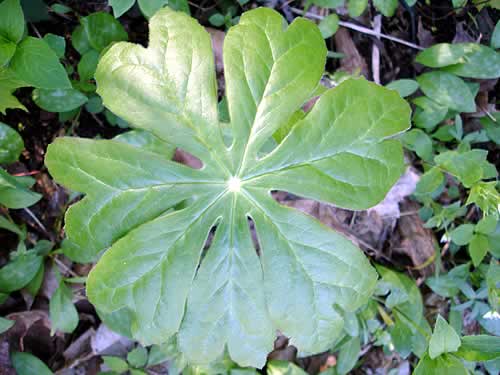
The May-Apple has green leaves that look like an umbrella that develops a very small light yellow flower underneath. The May-Apple grows to be 18” high and likes rich woods, damp shady clearings. The small yellow flower blooms form April to June. The May-Apple gets it name from the small apple it produces in May.
Large-Flower Trillium
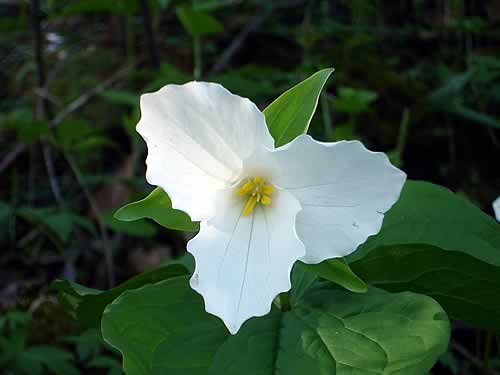
The Large-Flower Trillium has 3 large solid white petals and 3 green leaves. As the Large-Flower Trillium ages, the white petals will change to a light pink. It grows to a height of 18 inches. The Large-Flower Trillium blooms from April to June and likes woods and thickets.
Purple Trillium

The Purple Trillium has 3 maroon petals and 3 green leaves. It grows to a height of 16 inches and likes rich woods. The Purple Trillium blooms for April to June and is the most common eastern trillium found. The Purple Trillium is also known as “Stinky Benjamin” for its unpleasant odor.